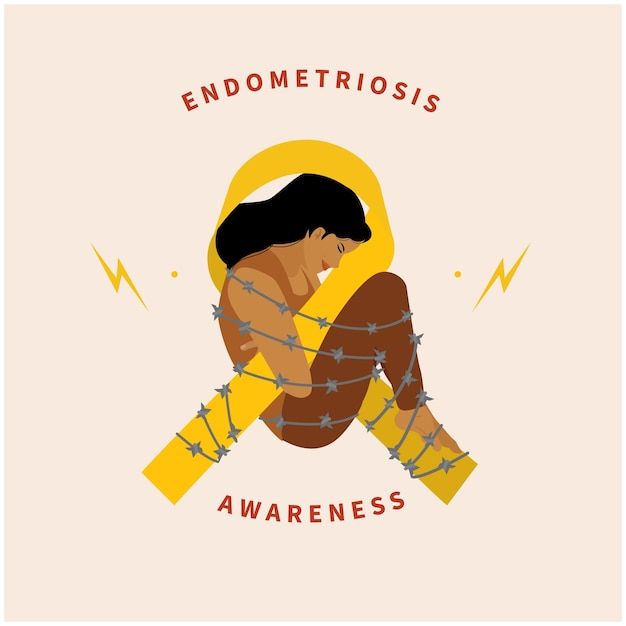
Endometriosis- a common condition?
As an acupuncturist, I believe far too little attention is paid to menstrual cycle issues, pelvic floor problems, and hormonal imbalances. Yet, I see these complaints on a weekly basis in my practice for the past five years. For Endometriosis Awareness Month, this blog post will focus on one of the most common conditions in my clinic: Endometriosis.
In the Netherlands, doctors and gynaecologists estimate that 1 in 10 women between 20 and 55 years are diagnosed with Endometriosis (LUMC, 2026). However, reaching this diagnosis is often a long and difficult journey for patients. It takes an average of 7 to 10 years before someone receives an endometriosis diagnosis (Ziegler et al., 2024).
What exactly is endometriosis?
In endometriosis, tissue that resembles the uterine lining (endometrium) grows outside the uterus. This tissue settles, for example, on the ovaries, the fallopian tubes, the intestines, or the bladder. Every month, this tissue acts the same as your uterine lining within the hormonal cycle: it builds up and bleeds. Because this blood on the tissue that has formed outside of the uterus cannot leave your body, it causes inflammation, scar tissue, and adhesions.
The symptoms of endometriosis
Endometriosis is chronic and it is much more than just “a painful period.” It can also have significant consequences for mental health. Common symptoms of endometriosis include:
Extreme, painful cramps in abdomen can be before and during menstruation. Can also be pain in back, legs and shoulders.
Pain during or after penetration.
Pain during urination or bowel movements
Loose stools and/or constipation
Chronic fatigue and exhaustion.
Fertility problems.
Painful urination
Migraine, nausea
The TCM and Acupuncture Perspective on endometriosis
Within Traditional Chinese Medicine (TCM), we look at endometriosis differently. In TCM, pain is always seen as a blockage: “Where there is no free flow, there is pain.” Endometriosis can be diagnosed as Blood Stagnation in the lower abdomen, sometimes combined with “Cold” in the uterus. The organs that are often connected are the Liver, Kidneys and Spleen. Depending on your health and other symptoms endometriose always requires an individualised treatment plan.
How acupuncture helps: I use acupuncture to focus on moving that stagnation. By needling specific points on the abdomen and legs, we stimulate blood circulation to the pelvic organs. This helps reduce inflammation, calm the nervous system (which dampens pain signals), and support the body’s natural removal of waste products. We often combine this with heat lamps to expel the “Cold” in the uterus.
What can I do myself?
If you are suffering from the above mentioned complaints please discuss this with your your GP (General Practitioner) you may want to ask for a referral to a gynaecologist. Additionally, there are TCM ways to support you health. When it comes to food you can add anti-inflammatory foods (less sugar, more omega-3s, more fruit and vegetables). From a TCM perspective we would also advise finding time for rest and relaxation in your busy schedule. Since a relaxed body reacts different to pain signals. Beside this we also want you to keep your abdomen warm and avoiding wearing crop tops or short tops.
Do you want to know what acupuncture can mean for your menstrual complaints and/or endometriosis? Book a session.
Sources
Ziegler, C., Martin, V., Schiffmann, S. L., & Herr, D. (2024). Time to Diagnose Endometriosis: Current Status, Challenges and Regional Characteristics—A Systematic Literature Review. Journal of Clinical Medicine, 13(1), 124.** ********https://doi.org/10.3390/jcm13010124
LUMC,