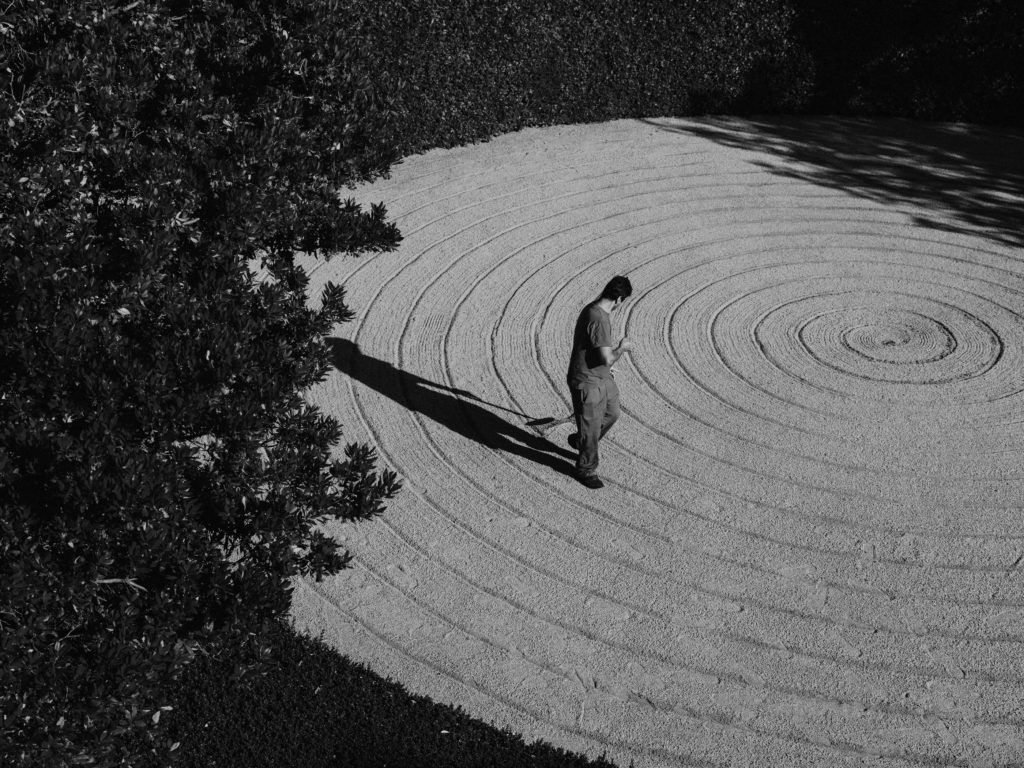
Without even realizing it, life sometimes passes us by incredibly fast. Suddenly, it’s the deadline of an important project and you find yourself stressed out, doing multiple things at once. Or, before you know it, time flies by and you are another year older. Many of the things we do daily happen on autopilot. As a result, we are productive and fast, but the question is: are we also intentional?
With mindfulness, we can learn to live more intentionally and slow down our pace. It is a technique that helps you manage your attention consciously. What exactly is mindfulness? And why is mindfulness so important?
The History of Mindfulness: From Ancient Traditions to Modern Psychology
Mindfulness as we know it in the West has its roots in traditional Asian practices. Forms of mindfulness were already being practiced in the early scriptures of Buddhism and within Hinduism. Originally, it was intended as a spiritual path to achieve enlightenment, self-knowledge, and detachment from suffering.
In the West, it took a scientific turn in the late 1970s. Around 1979, American molecular biologist Jon Kabat-Zinn developed the Mindfulness-Based Stress Reduction (MBSR) program. He took the concepts of mindfulness from Buddhism and Hinduism and removed its original religious elements, translating it into a clinical and medical approach. Since then, this secular version of mindfulness has been widely used in research and practice within modern psychology. It has become a scientifically proven tool for conditions such as ADHD, anxiety disorders, burn-out, depression, self-image issues and more.
What Does Science Say About Mindfulness?
There are many impressive studies showing that mindfulness has a significant impact on our brain and helps reduce many mental complaints.
-
Anxiety and stress: A recent and well-known study published in JAMA Psychiatry (2023) showed that an 8-week mindfulness training program is not less effective in reducing anxiety disorders as the commonly used antidepressant Escitalopram (Lexapro).
-
Meditation positively affects the brain: Research from Harvard University (Lazar et al.) shows that regular meditation increases the density of gray matter in the hippocampus (which is crucial for learning and memory), while anxiety and stress is actually shrink the amygdala (our brain’s ‘fear and stress center’).
Buddhist Mindfulness of Thay Thich Nhat Hanh
When I was a student, I was introduced to mindfulness by my father and my eldest sister, specifically through the teachings of the Vietnamese Buddhist monk and peace activist Thay Thich Nhat Hanh. I had the privilege of meeting him and learning from him and his direct disciples. His philosophy lies around mindfulness in the most everyday things. It is not just about using incense sticks and palo santo and sitting still on a cushion for an hour; it is also about drinking a cup of tea with your full attention, or walking mindfully.
One of his famous quotes is “No mud, no lotus”. Without the mud of life (the pain, the stress, the obstacles), a beautiful lotus flower (growth, peace, insight) cannot bloom. We can only see the flower if we give it our attention. It is an art not to let ourselves be dragged down by the pain (the mud). It is an art to live your life with a focus on the here and now.
I truly believe that mindfulness is something we can all benefit from, and that we can easily find a place for it in our daily lives. Here are my top three reasons why I am such a big fan of mindfulness:
1. Life Moves Fast (And It’s Okay to Slow Down)
We simply do not pause enough to reflect on things in life. In our Western society, we have become obsessed with speed and productivity. Standing still or resting is often—incorrectly—seen as slow, unproductive, or even lazy. But by slowing down, you give your nervous system the chance to reset. You learn to observe what is happening in your body and mind again, instead of constantly rushing through everything.
2. Mindfulness Helps with Anxiety and Burnout
An anxious brain is constantly overthinking. Your thoughts worry about the future and what might happen, or they get stuck in the past, ruminating on what went wrong. Mindfulness trains your brain to return to the only moment where you truly are: the present. By getting out of your head and into your physical body, you calm your fight-or-flight system, lower your cortisol (stress hormone), and create space to recover from the looping thoughts that worsen burnout and panic.
3. Mindfulness Improves Your Focus
In a world filled with modern technologies, smartphones, and notifications, there is constant distraction. Our attention span is short, which can be convenient in some ways, but with mindfulness, you learn to consciously direct your attention. During mindfulness exercises, you learn to intentionally bring your focus to your breath, for example. Every time you get distracted during an exercise, you learn to gently bring your attention back. In this way, you are actively training your brain. You learn to gain control over your thoughts and focus better on a single task, instead of doing everything in a rushed and half-hearted way.
Acupuncture and Mindfulness: A Unique Combination
In my clinic in Amsterdam East, I combine mindfulness with acupuncture. Every treatment is tailor-made and personalised; based on what works best for you, you will learn more about mindfulness and receive practical tools that you can start using immediately at home.
Are you curious about how this holistic combination of acupuncture and mindfulness can calm your nervous system and bring you back into balance? Book your consult at the clinic today
Stay Connected
Would you like to receive clear, practical articles on hormonal health, nutrition, and TCM?
-
Newsletter: Sign up below to stay in touch.
-
Instagram: Follow me here for insights on holistic health and TCM.
Acupuncture in Amsterdam East
My clinic is located in the Eastern Docklands (Oostelijke Eilanden), between Java Island and Amsterdam Central Station.
-
Public Transport: Tram 26 and local buses stop a 5-minute walk away.
-
Car: Ample parking is available in the nearby De Loodsen or Withoedenveem parking garages.